
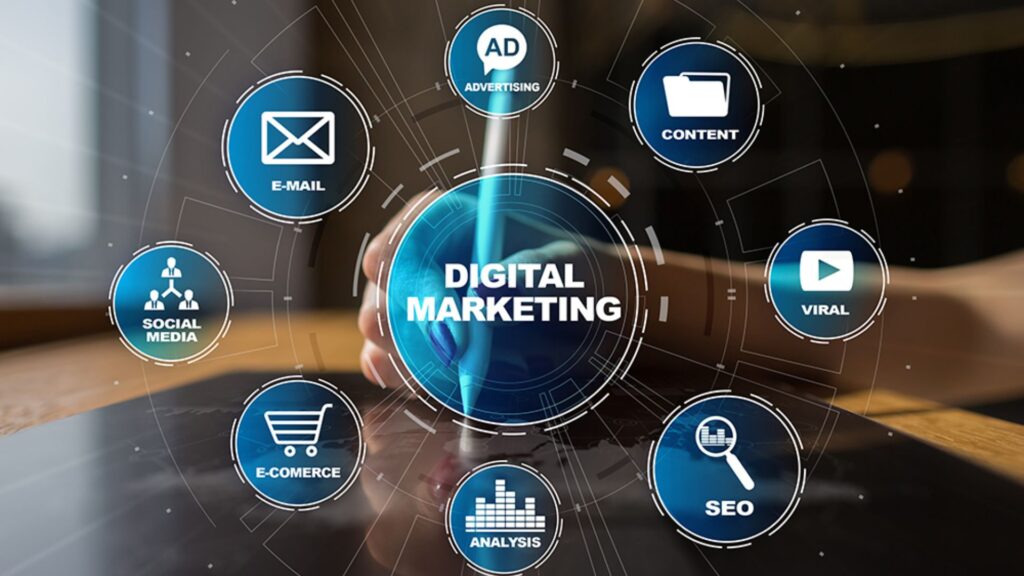
Digital marketing uses online channels (websites, social media, search engines, email, apps) and digital tech to promote products/services, engage customers, and build brands, offering targeted messaging and measurable results
Key Types of Digital Marketing
Digital marketing encompasses a wide range of tactics, many of which can be used in combination for an integrated strategy.
- Search Engine Optimization (SEO): The process of optimizing website content to achieve a higher ranking in search engine results pages (SERPs) and attract organic (free) traffic.
- Pay-Per-Click (PPC) Advertising: A model of paid advertising where marketers pay a fee each time their ad is clicked. This is common on search engines (like Google Ads) and social media platforms.
- Social Media Marketing: Using social networks (Facebook, Instagram, LinkedIn, TikTok, etc.) to build brand awareness, engage with customers, and drive traffic or sales.
- Content Marketing: Creating and distributing valuable, relevant content (blogs, videos, e-books, infographics) to attract and retain a target audience, establishing a brand as an industry authority.
- Email Marketing: Sending targeted, personalized messages to a list of subscribers to promote products, share updates, and foster customer loyalty.
- Affiliate Marketing: Partnering with third-party individuals or companies (affiliates or influencers) to promote products in exchange for a commission on sales or leads generated.
- Mobile Marketing: Tailoring marketing efforts to reach an audience on their mobile devices through SMS, MMS, in-app notifications, and mobile-optimized websites.
Benefits of Digital Marketing
- Global Reach: Digital marketing campaigns can reach a worldwide audience, transcending geographical boundaries, at a much lower cost than traditional media.
- Precise Targeting: Marketers can use data to target specific demographics, interests, and behaviors, ensuring messages reach the most relevant audience.
- Measurable Results: Digital platforms provide detailed analytics to track performance metrics like click-through rates (CTR), conversion rates, and return on investment (ROI), allowing for data-driven optimization.
- Cost-Effective: Compared to traditional advertising, many digital marketing tactics are more affordable, evening the playing field for small and medium-sized businesses.
- Increased Engagement & Personalization: Digital channels facilitate two-way communication and allow for personalized experiences, helping to build stronger relationships and brand loyalty with customers.